

Collagen and Whey Protein Benefits: A Complete Guide
Table of Contents
- Collagen and Whey Protein Benefits: What Each One Does
- Collagen vs Whey Protein: Key Differences
- Collagen and Whey Protein for Muscle Support
- Collagen and Whey Protein Together: Why a Blend Makes Sense
- Collagen and Whey Protein Timing: When to Take Each
- How to Choose a Quality Collagen and Whey Protein Blend
- Who Should Be Careful With Collagen or Whey
- Conclusion
- Frequently Asked Questions
Last Updated: October 16, 2026
Collagen and Whey Protein Benefits: What Each One Does
Collagen and whey protein benefits come down to two very different proteins doing two very different jobs. Collagen is a structural protein best known for supporting skin, joints, and connective tissue. Whey is a complete protein that supports muscle maintenance and recovery. At OnHealth Nutrition, we hear from women every week who are dieting, losing weight, or simply trying to age well, and they want to know which one deserves a spot in their routine. Below, we break down what each protein actually does, how they differ, and how to use them together.
What Collagen Protein Is
Collagen protein is the most abundant structural protein in the human body, forming the framework of skin, tendons, ligaments, and cartilage. It is made up of amino acids, with glycine, proline, and hydroxyproline making up a large share of its profile. As we age, our natural collagen production declines, which is one reason skin elasticity and joint comfort become bigger topics after 35.
Collagen supplements usually come as collagen peptides, which are shorter chains that mix easily into drinks. Most collagen powders are not complete proteins because they are low in one essential amino acid, tryptophan.
What Whey Protein Is
Whey protein is a complete protein derived from milk during cheese production. It contains all nine essential amino acids, including leucine, which plays a key role in triggering muscle protein synthesis. That makes whey a popular choice for muscle growth, muscle maintenance, and recovery after resistance exercise.
Whey digests quickly and mixes smoothly, which is why it shows up in so many protein powders. If your goal is supporting lean muscle while you lose weight, whey is the more direct tool.
Collagen vs Whey Protein: Key Differences
The main difference between collagen and whey comes down to amino acid completeness, but that single fact ripples out into digestibility, protein quality scoring, and how each fits your daily protein needs. Here is the fuller picture.
Feature |
Collagen |
Whey |
|---|---|---|
Protein quality |
Incomplete (low in tryptophan) |
Complete, all 9 essential amino acids |
Amino acid profile |
Rich in glycine, proline, hydroxyproline |
Rich in leucine, lysine, and the full essential set |
Digestibility |
Varies by peptide size; generally easy on the stomach |
Fast-digesting; quickly absorbed |
Best known for |
Skin elasticity, joints, connective tissue |
Muscle growth, maintenance, recovery |
Mixes well in |
Coffee, smoothies, water |
Shakes, smoothies, oats |
Typical role |
Beauty and joint support |
Daily protein and muscle support |
Amino acid profiles. Collagen is built mostly from glycine, proline, and hydroxyproline. Those three make up a large share of its profile, and they are the amino acids your body uses to support skin, tendons, ligaments, and cartilage.
Whey, by contrast, contains all nine essential amino acids, including leucine. Leucine is the amino acid most closely tied to triggering muscle protein synthesis, the process your body uses to build and repair muscle. Whey also digests quickly, which is one reason it shows up in so many post-workout powders.
Protein quality scoring. Nutrition researchers often use a scoring system called DIAAS (Digestible Indispensable Amino Acid Score) to compare protein sources. Whey scores very high on this scale because it is complete and highly digestible. Collagen scores lower because it is missing tryptophan and is lower in some other essential amino acids.
What this means in practice. If your goal is supporting lean muscle while you lose weight, whey is the more direct tool because it delivers the complete protein and leucine your muscles need. If your goal is supporting skin elasticity and joint comfort as you age, collagen's structural amino acids are the star.
Collagen and Whey Protein for Muscle Support
Whey is the stronger choice for muscle. Its complete amino acid profile, especially leucine, supports muscle protein synthesis, the process your body uses to build and repair muscle. For women who are dieting or losing weight, keeping protein intake high helps support lean muscle while the scale moves.
Collagen plays a supporting role here too. Connective tissue, including tendons and ligaments, benefits from the glycine and proline collagen provides. Strength training women often pair the two: whey for muscle, collagen for the connective tissue that holds it all together.
A common mistake is relying on collagen alone to hit daily protein goals. Because it is not a complete protein, it cannot do that job on its own.
Collagen and Whey Protein Together: Why a Blend Makes Sense
Combining collagen and whey protein together gives you the best of both. The whey supplies a complete protein with all the essential amino acids, while the collagen contributes glycine, proline, and hydroxyproline for skin, joints, and connective tissue.
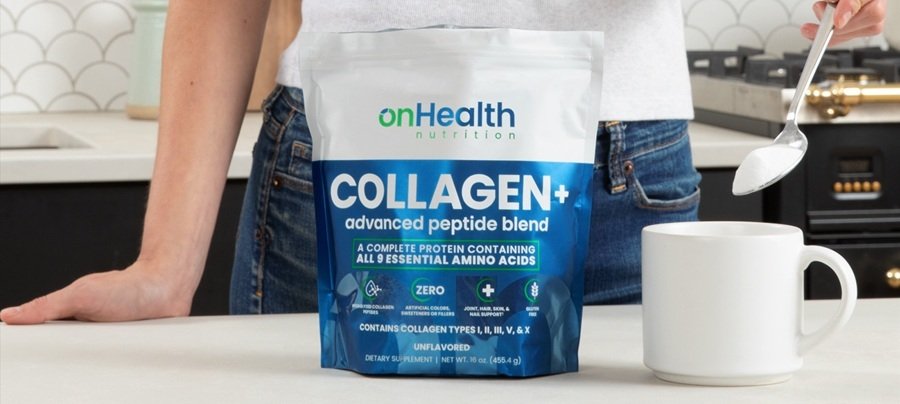
This is exactly how we built Collagen+. It is a collagen and whey protein blend with five types of collagen, which makes it a complete protein source. Each pouch has 33 servings, and 57% of the amino acid profile comes from glycine, proline, and hydroxyproline. For women who want one scoop that covers muscle support and beauty-from-within support, a blend removes the guesswork.
Collagen and Whey Protein Timing: When to Take Each
Most guides treat timing as an afterthought, but the honest answer is more useful than "it depends." Total daily protein intake matters more than the clock, yet timing and dosing can still help you get consistent, goal-specific results. Here is a practical framework.
For muscle support. If your goal is supporting lean muscle while you diet or lose weight, aim for a protein serving within a couple of hours of resistance exercise. A common pattern is 20 to 40 grams of complete protein per serving, depending on your body size, training load, and total daily intake.
For skin and joint support. Consistency matters more than the clock. Collagen's structural amino acids, glycine, proline, and hydroxyproline, support skin, joints, and connective tissue over time, and that support depends on regular daily intake rather than a specific window.
For general nutrition. If you are simply trying to close a daily protein gap, timing is flexible. A serving between meals or alongside a meal works well. What matters is that you are getting enough total protein across the day to support your goals.
A simple approach:
- Post-workout: a blend or whey to support muscle recovery
- Morning coffee or smoothie: collagen or a blend for a daily routine you will actually keep
- Between meals: a serving to help close your daily protein gap
A note on dosing. These ranges are general guidance, not prescriptions. Your ideal amount depends on your body weight, activity level, overall diet, and health status. If you are unsure how much protein you need, a registered dietitian or your healthcare provider can help you dial it in.
The best timing is the one you can repeat. Skip the complicated schedules and focus on consistency.
How to Choose a Quality Collagen and Whey Protein Blend
Start with the label. A quality blend should tell you which types of collagen it contains, whether it is a complete protein, and how much protein is in each serving. Look for a clear amino acid breakdown, especially glycine, proline, and hydroxyproline if skin and joints are your focus.
A quick checklist:
- States the collagen types included
- Confirms complete protein status
- Lists protein per serving and serving size
- Shows the amino acid profile
- Mixes smoothly without grit
Who Should Be Careful With Collagen or Whey
Collagen and whey are generally well tolerated, but they are not right for everyone. Whey comes from milk, so anyone with a dairy allergy or lactose sensitivity should choose carefully. Collagen is derived from animal sources, so it is not suitable for vegetarians or vegans.
If you take medication, have a medical condition, or are pregnant or nursing, talk with your healthcare provider before starting a new supplement. This is not medical advice, and a quick conversation with your provider is the safest first step.
Conclusion
Getting enough protein while dieting, staying active, and supporting skin and joints as you age is a real balancing act. Most women do not need to choose between collagen and whey; they need both, in a form that is easy to keep up with. Collagen+ from OnHealth Nutrition is a complete protein blend with five types of collagen, a high concentration of glycine, proline, and hydroxyproline, and 33 servings per pouch, made to support skin health, joint health, and total body vitality. Shop Collagen+ and give your daily routine one simple scoop.
Frequently Asked Questions
Should you take collagen and whey protein together?
Yes, they can be taken together. Whey is a complete protein with all nine essential amino acids, while collagen provides glycine, proline, and hydroxyproline. Combining them in one serving gives you a broader amino acid profile than either alone. A blended product like Collagen+ makes this simple because you get both in a single scoop, no separate measuring or mixing required.
How is collagen protein different from whey protein?
Whey is a complete protein, meaning it contains all nine essential amino acids your body cannot make on its own. Collagen is an incomplete protein because it lacks tryptophan and is low in some other essential amino acids. Whey is well studied for muscle protein synthesis, while collagen is studied for skin elasticity, joint comfort, and connective tissue support. They serve different roles, which is why some people use both.
Is collagen or whey better for supporting lean muscle?
Whey has the stronger research background for muscle protein synthesis because of its complete amino acid profile and high leucine content. Collagen alone is not a complete protein, so it cannot fully support muscle maintenance on its own. A blend that includes whey gives you the muscle-supporting benefits of a complete protein plus the connective tissue support collagen provides.
Can collagen and whey protein help you meet your daily protein needs?
They can help fill gaps, especially if you are dieting or eating less than usual. Whey is a complete protein, so it counts toward your daily intake the same way chicken or eggs do. Collagen contributes protein too, but because it is incomplete, it should not be your only protein source. A blend like Collagen+ provides both, making it easier to hit your target without planning every meal around protein.
When should you take collagen and whey protein?
Timing is flexible. Many people take a scoop in the morning with coffee or a smoothie, or after a workout when the body is primed for recovery. If your goal is muscle support, taking it within a few hours of resistance exercise may be helpful. For skin and joint support, consistency matters more than timing. Pick a time you will remember and stick with it daily.
What should you look for in a collagen and whey protein blend?
Check the label for the types of collagen included, the amino acid profile, and whether the product is a complete protein. A blend with multiple collagen types covers more ground for skin, joints, and connective tissue. Look for a product that mixes easily and tastes neutral enough to use daily. Collagen+ contains five types of collagen plus whey, making it a complete protein in one scoop.
Who should talk with a healthcare provider before taking collagen or whey?
Anyone who takes prescription medication, has a medical condition, or is pregnant or nursing should check with their healthcare provider first. People with a dairy allergy should avoid whey. If you have kidney or liver concerns, ask your provider whether added protein is appropriate for you. It is always better to ask before starting a new supplement.
These statements have not been evaluated by the Food and Drug Administration. This product is not intended to diagnose, treat, cure, or prevent any disease.