

Collagen for Women Over Fifty: A 2026 Guide
Table of Contents
- Why Collagen Needs Change for Women Over Fifty
- Collagen Supplements for Skin Over 50
- Collagen and Protein for Women Over 50
- Daily Collagen Dosage for Results
- How to Choose a Quality Collagen for Women Over Fifty
- Frequently Asked Questions
Last Updated: October 9, 2026
Why Collagen Needs Change for Women Over Fifty
Collagen for women over fifty is not the same conversation it was at thirty. The reason is simple: collagen is the structural protein that holds your skin, joints, bones, and connective tissue together, and your body makes less of it with every passing decade.
Collagen Production Decline After 50
Collagen production drops steadily with age, and the drop becomes noticeable for many women in their fifties. Collagen is a protein built from amino acids, and your body naturally slows its output as part of the aging process. You may notice it first in your skin, then in your joints: stiffness after sitting, creaky knees on stairs, slower recovery from a workout that used to feel easy.
The good news is that collagen responds to support. Supplementation with collagen peptides gives your body the building blocks it uses for collagen synthesis.
Menopause and Collagen Loss
Menopause speeds up collagen loss because estrogen plays a role in supporting collagen production. As estrogen levels fall during the menopausal transition, many women notice changes in skin elasticity, skin hydration, and joint comfort at the same time. The postmenopausal years are when these changes tend to stack up.
This is why the conversation about collagen for women over fifty is different from a generic beauty topic. It is about a real physiological shift, and it is worth talking to your healthcare provider about how it fits into your overall health picture.
Collagen Supplements for Skin Over 50
Collagen supplements for skin over 50 work by supplying the amino acids your body uses to support the dermis, the layer of skin responsible for firmness and hydration. The most studied forms are hydrolyzed collagen and collagen peptides, which are simply collagen broken into smaller pieces so they are easier for your body to absorb.
What most guides miss is that skin support is a long game. Fine lines and wrinkles reflect years of collagen loss, so the goal is steady support rather than a quick fix. Pairing collagen with vitamin C matters too, since vitamin C synergy supports normal collagen formation in the body.
Collagen and Protein for Women Over 50
Collagen and protein for women over 50 belong in the same conversation, and this is where many products fall short. Most collagen powders are not complete proteins, meaning they lack one or more of the essential amino acids your body cannot make on its own. If you are dieting, losing weight, or taking a GLP-1 medication, getting enough complete protein matters even more, because your goal is to protect lean muscle while the scale moves.
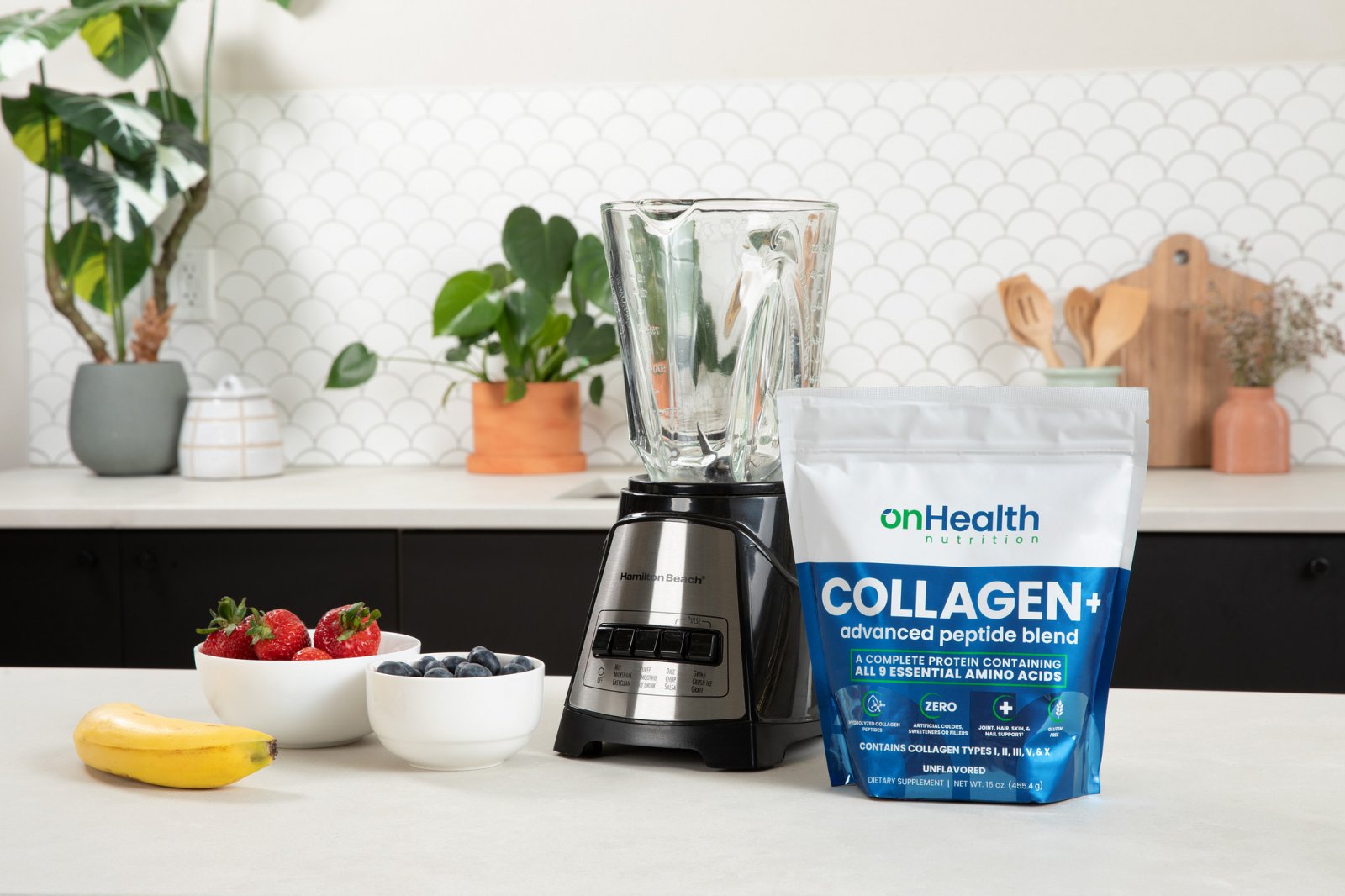
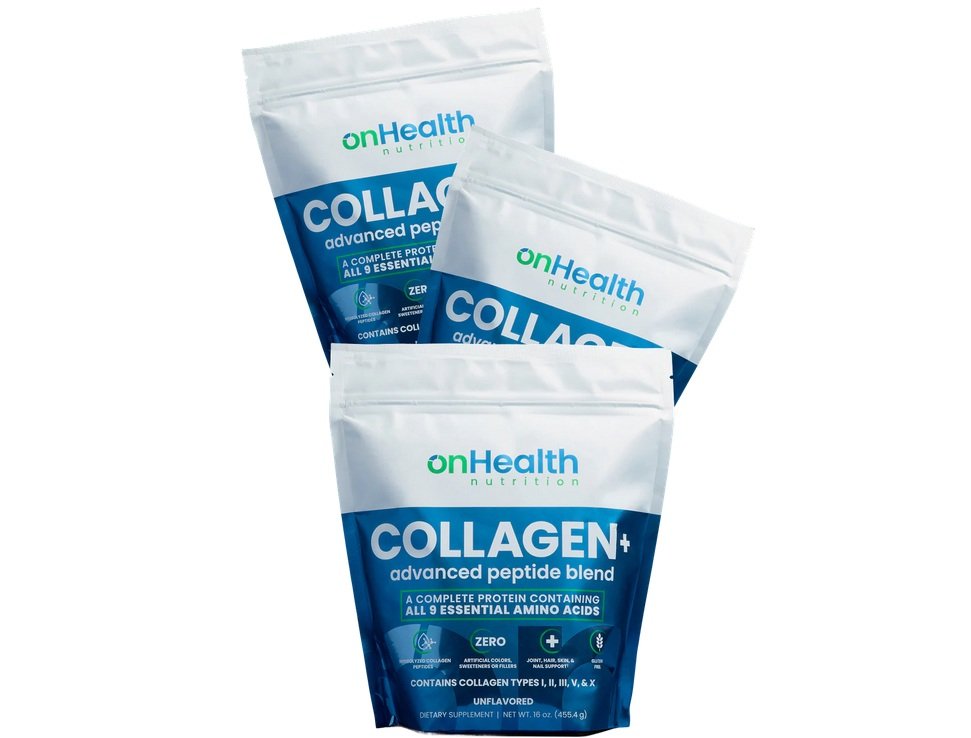
This is the idea behind our Collagen+: a collagen and whey protein blend that is a complete protein source, with five types of collagen and a high concentration of glycine, proline, and hydroxyproline.
Goal |
What to Look For |
Why It Matters |
|---|---|---|
Skin elasticity support |
Hydrolyzed collagen peptides |
Smaller pieces are easier to absorb |
Joint comfort |
Types I, II, III, V, and X |
Different types support different tissues |
Lean muscle while dieting |
A complete protein source |
Supplies all essential amino acids |
Daily convenience |
Unflavored, mixable powder |
Easier to keep up with consistently |
Daily Collagen Dosage for Results
Daily collagen dosage for results comes down to consistency more than perfection. Common approaches range from a single scoop daily to splitting the dose across the day, and the right amount for you depends on your goals, your diet, and what your healthcare provider recommends. What matters most is picking an amount you can actually keep up with.
Here is how we would think about it:
- Choose a daily amount you can repeat without thinking about it
- Take it at the same time each day, coffee or smoothie works well
- Give it several weeks of steady use before judging anything
- Track how your skin, joints, and energy feel over time
- Adjust with your healthcare provider if you take medication
A common mistake is buying a month's supply, using it four times, and deciding collagen does not work. Consistency is the whole game.
How to Choose a Quality Collagen for Women Over Fifty
Most collagen guides hand you the same five-point checklist: type, absorption, amino acids, sourcing, complete protein. That list is fine as far as it goes, but it leaves out two things that matter a lot for women over fifty, medication interactions and sourcing transparency. Let's cover the standard checks quickly, then go deeper on the two that most guides skip.
The Standard Checks
- Types of collagen. Look for a multi-type formula covering I, II, III, V, and X. Different types are found in different tissues, so a multi-type formula supports skin, joints, and connective tissue together.
- Absorption. Hydrolyzed collagen and collagen peptides are collagen broken into smaller pieces, which makes them easier for your body to absorb.
- Amino acid profile. Glycine, proline, and hydroxyproline are the backbone of collagen. A formula with a high concentration of these is doing more of the structural work.
- Complete protein. If you are dieting, losing weight, or protecting lean muscle, a collagen that also contains whey gives you all nine essential amino acids, something most collagen powders cannot claim.
The Other Check Most Guides Skip: Sourcing Transparency
Collagen comes from animal sources, most commonly bovine (cow) hide and bone, or marine (fish) skin and scales. Where that raw material comes from, and how it is processed, affects both quality and your comfort level with the product.
Here is what to look for on a label:
- Named source. "Grass-fed bovine" or "wild-caught marine" tells you more than just "bovine" or "marine."
- Processing method. Hydrolyzed collagen is the standard for absorption. If a label does not say hydrolyzed or peptide, ask why.
A Quick Note on Collagen and Gut Health
One more angle worth knowing: the amino acids in collagen, especially glycine, play a role in supporting the gut lining. For women over fifty, whose digestion can change with age and hormonal shifts, that is a quiet bonus, not a headline, but a reason a daily collagen habit can fit into a broader wellness routine.
If you take medication or have a medical condition, talk to your healthcare provider before adding any supplement. You can find out more about our complete collagen formula and shop now at onHealth Collagen+.
Frequently Asked Questions
What should women over 50 look for in a collagen supplement?
Look for a product that states its collagen types, shows the amino acid profile, and includes a complete protein source. Women over fifty often benefit from a formula with multiple collagen types to support skin, joints, and bones. Check for third-party testing, clear sourcing information, and a serving size that fits your daily routine. A supplement that mixes easily and tastes neutral is more likely to become a consistent habit, which matters more than any single ingredient claim.
How much collagen should women over 50 take daily?
The right amount for you depends on your goals, your diet, and how your body responds. Start with the serving size on the label and stay consistent for at least eight to twelve weeks before judging results. If you take medication or have a medical condition, talk with your healthcare provider before starting any new supplement.
Is collagen supplement good for menopause?
Collagen supplements are not a treatment for menopause, but they can support areas that change during this transition. Estrogen decline affects skin elasticity, joint comfort, and bone mineral density. A daily collagen routine may help support skin hydration and joint mobility as part of a broader plan that includes protein, strength training, and guidance from your healthcare provider. Collagen is a supplement, not a replacement for medical care or hormone therapy decisions.
What is the downside to taking collagen?
Collagen is generally well tolerated, but some people notice mild digestive discomfort, bloating, or a feeling of fullness when they first start. Because many collagen powders come from bovine or marine sources, check the label if you have allergies. Collagen is not a complete protein on its own unless it is blended with a protein like whey, so it should not replace your main protein sources. Talk with your healthcare provider if you take medication or have a medical condition.
Can collagen support skin elasticity and joint comfort as women age?
Daily collagen intake may support skin elasticity and joint comfort, though individual responses can vary. Collagen provides amino acids like glycine, proline, and hydroxyproline that your body uses in connective tissue. Pairing collagen with vitamin C and a protein-rich diet may support absorption and collagen synthesis. Consistency matters more than any single dose, so choose a formula you can take every day without hassle.